In What Style of Art Does the Artist Apply Paint Rapidly to Enlarge Convert to Show Emotion
Adobe Photoshop plays a office in almost every digital creator's life. Photoshop is what many digital artists, photographers, graphic designers, and even some web developers accept in mutual. The tool is and then flexible that oft yous can achieve the aforementioned results in several different ways. What sets the states all autonomously is our personal workflows and our preferences on how we employ it to achieve the desired outcome.
I use Photoshop every mean solar day and shortcuts are a vital part of my workflow. They allow me to relieve time and to focus amend on what I am doing: digital illustration. In this article, I am going to share the Photoshop shortcuts I use frequently — some of its features that help me be more productive, and a few cardinal parts of my artistic process.
To turn a profit the almost from this tutorial, some familiarity with Photoshop would exist required but no matter if you are a complete beginner or an avant-garde user, you should be able to follow along because every technique volition be explained in detail.
For this article, I've decided to apply one of my near famous Photoshop artworks named "Regret":
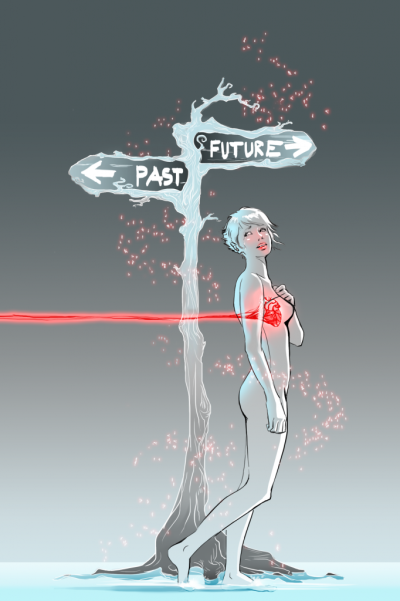
Table of Contents
- Introduction To Shortcuts: The Path To Boosting Your Productivity
- The Keyboard Shortcuts Window
- How To Increase And Decrease The Brush Size
- How To Increase And Decrease The Brush Softness
- Quick Colour Picker (HUD Color Picker)
- Working With Layers
- Working With Curves
- Actions: Recording Everything Y'all Need For Your Projection
- Conclusion
- Further Reading
More after jump! Continue reading below ↓
1. Introduction To Shortcuts: The Path To Boosting Your Productivity
Every unmarried designer, artist, photographer or spider web developer has probably in one case opened Photoshop and has pointed and clicked on an icon to select the Brush tool, the Motion tool, and so on. Nosotros've all been there, but those days are long gone for virtually of us who utilise Photoshop every day. Some might even so do it today, yet, what I would similar to talk almost before getting into the details, is the importance of shortcuts.
When yous remember about it, you're saving perhaps one-half a 2d by using a keyboard shortcut instead of moving your mouse (or stylus) over to the Tools bar and selecting the tool you need by clicking on the tool'due south little icon. To some that may seem footling, however, exercise consider that every digital creator does thousands of selections per project and these half-seconds add up to become hours in the finish!
Now, before we continue, please annotation the following:
- Shortcuts Notation
I use Photoshop on Windows but all of the shortcuts should work the aforementioned on Mac Os; the only matter worth mentioning is that the Ctrl (Control) key on Windows corresponds to the Cmd (Command) key on the Mac, then I'll exist using Ctrl/Cmd throughout this tutorial. - Photoshop CS6+
All the features and shortcuts mentioned here should work in Photoshop CS6 and later on — including the latest Photoshop CC 2018.
two. The Keyboard Shortcuts Window
To start off, I would similar to show you where you tin observe the Keyboard Shortcuts window where you lot could modify the already existing shortcuts, and learn which key is bound to which feature or tool:
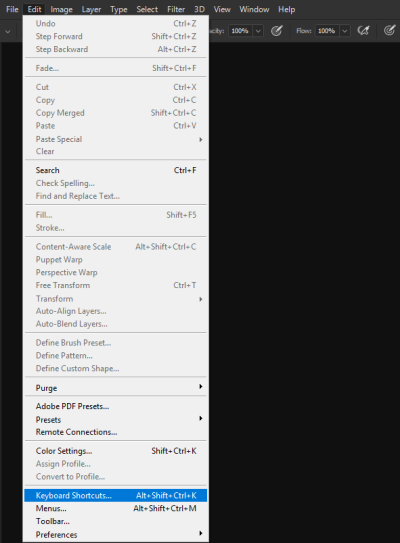
Open Photoshop, go to Edit and select Keyboard Shortcuts. Alternatively, you lot tin admission the same from here: Window → Workspace → Keyboard Shortcuts & Menus.
Now you will exist greeted by the Keyboard Shortcuts and Menus window (dialog box), where you can pick a category you would like to check out. There are a ton of options in there, so it could get a bit intimidating at first, merely that feeling will pass soon. The master iii options (attainable through the Shortcuts for:... dropdown listing) are:
- Awarding Menus
- Console Menus
- Tools
Typically the Application Menus will be the first affair you'll see. These are the shortcuts for the carte options you see on the tiptop of Photoshop's window (File, Edit, Paradigm, Layer, Type, and then on).
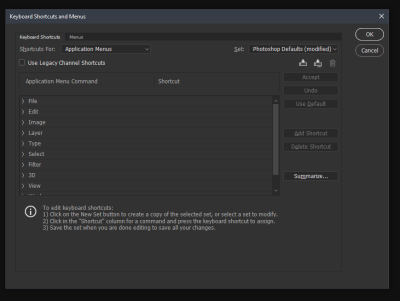
And then for instance if y'all're using the Effulgence/Dissimilarity option often, instead of having to click on Image (in the bill of fare), then Adjustments and finally observe and click on Effulgence/Contrast particular, y'all can simply assign a key combination and Brightness/Contrast will show right upwardly after you lot press the keys assigned.
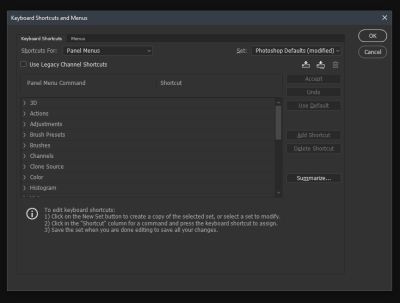
The 2d section, Panel Menus, is an interesting one as well, particularly in its Layers portion. You become to see several options that could be of utilise to you depending on the type of work you need to do. That's where the standard New Layer shortcut lies (Ctrl/Cmd + Shift + Due north) only as well you can ready a shortcut for Delete Hidden Layers. Deleting unnecessary layers helps in lowering the size of the Photoshop file and helps improving performance considering your estimator volition non accept to cache in on those actress layers that yous're actually not using.
The third department is Tools where you can come across the shortcuts assigned to all the tools found in the left panel of Photoshop.
Pro Tip: To cycle between any of the tools that have sub-tools (case: the Eraser tool has a Groundwork Eraser and a Magic Eraser) yous just need to concur your Shift key and the appropriate shortcut push button. In example of the Eraser example, press Shift + E a few times until you attain the desired sub-tool.
Ane last affair I would like to mention earlier wrapping upward this section is that the Keyboard Shortcuts and Menus allows yous to fix up different Profiles (Photoshop calls them "sets" only I think that "profiles" better suits the purpose), so that if you don't actually want to mess with the Photoshop Defaults one, you can simply create a new personalized profile. Information technology's worth mentioning that when you create a new Profile, yous get the Default set of Photoshop Shortcuts in it until you start modifying them.
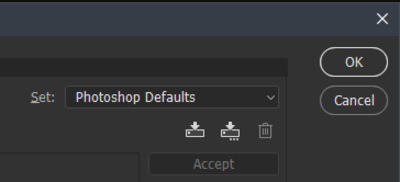
The Keyboard Shortcuts carte tin take a bit of time to become around to, yet, if you invest the time in the get-go (best if yous do it in your own time rather than during a project), you volition benefit later.
Focusing On The Shortcuts On The Left Side Of Your Keyboard
Later people acknowledged the usefulness of using shortcuts, somewhen they agreed that time is being wasted moving your paw from ane side of the keyboard to the reverse one. Sounds a fleck piddling again, however, remember those half-seconds? They still add upwardly, but this time it can even fatigue your arm if you're constantly switching tools and take to motion your arm around. And so this probably led to Adobe calculation a few more than shortcut features focused on the left side of the keyboard.
Now allow me show you lot the shortcuts that I most often use (and why).
3. How To Increase And Decrease The Brush Size
In order to increase or decrease the size of your brush, y'all demand to:
- Click and hold the Alt key. (On Mac, this would be the Ctrl and Alt keys),
- Click and agree the right mouse button,
- Then drag horizontally from left to right to increment, and from right to left to decrease the size.
If you're using annihilation from Photoshop CC 2017 and to a higher place, try pressing Fn + Ctrl + Alt while dragging. Looks like Adobe has inverse this specific shortcut and haven't document it only yet.
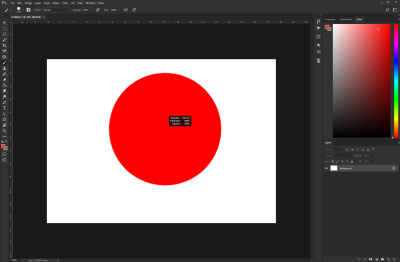
The moment I learned about this shortcut, I literally couldn't stop using it!
If you lot're a digital artist, I believe you volition particularly love information technology besides. Sketching, painting, erasing, just about everything you need to do with a brush becomes a whole lot easier and fluent because you wouldn't demand to reach for the all also familiar [ and ] keys which are the default ones for increasing and decreasing the brush size. Going for those keys tin can disrupt your workflow, especially if you need to take your eyes off your project or put the stylus aside.
4. How To Increment And Decrease The Brush Softness
Information technology'south actually the aforementioned key combination but with a slight twist: increasing and decreasing the softness of your Brush will piece of work only for Photoshop'due south default Round brushes. Unfortunately, if y'all accept any custom made brushes that have a custom form, this wouldn't work for those.
- Click and hold the Alt key. (On the Mac this would exist Ctrl and Alt keys),
- Click and agree the right mouse button,
- Then elevate up to harden the edge of your castor and drag downward to make it softer.
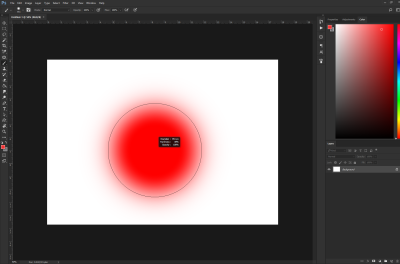
Again, this shortcut doesn't work for custom shaped brushes, although it would have been a really nice feature to have. Hopefully, we'll be able to come across that in a future update to Photoshop.
5. Quick Colour Picker (HUD Color Picker)
You may or may not be enlightened that Photoshop offers a quick colour picker (HUD Color Picker). And no, this is not the colour picker that is located in the Tools department.
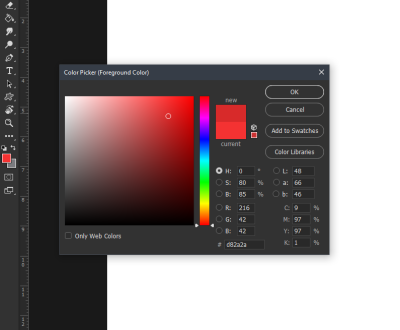
I am referring to what Adobe calls "HUD Color Picker" that pops upwardly right where your cursor is located on the sail.
This so-called HUD Color Picker is a congenital-in version and I believe it's been around since at to the lowest degree Photoshop CS6 (which was released back in 2012). If you're learning about this now, probably you're as surprised as I was when I first came across it a few months ago. Yes, it took me a while to get used to, too! Well, to be off-white, I exercise also have some reservations about this color picker, but I'll become to them in a second.
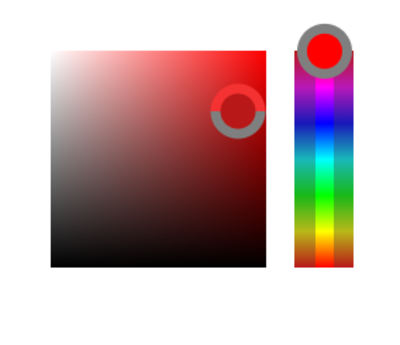
Here's how to pull up the HUD Colour Picker:
On Windows
- Click and agree Alt + Shift,
- Click and hold the correct mouse button.
On Mac
- Click and hold Ctrl ⌃ + Alt ⌥ + Cmd ⌘,
- Click and hold the correct mouse button.
If you've followed the central combinations above, you should see this colorful square. Nevertheless, y'all've probably noticed that information technology'south a flake awkward to work with information technology. For example, y'all demand to continue holding all of the keys, and while yous do that, yous need to hover over to the right rectangle to pick a colour gamut and and so hover back to the square to pick the shade. With all of the hovering that'due south going on, information technology's somewhat like shooting fish in a barrel to miss the colour that y'all've really set your heart to option, which could get a trivial abrasive.
Even so, I do believe that with a footling practice you will be able to master the Quick Colour Picker and get your desired results. If you're non too keen on using that congenital-in version, there are always third-party extensions that you can strap to your Photoshop, for example, Coolorus two Colour Wheel or Painters Bicycle (works with PS CS4, CS5, CS6).
6. Working With Layers
1 of the advantages of working digitally is undisputedly the ability to piece of work with layers. They are quite versatile, and in that location's a lot of things that yous could do with them. Yous could say that one could write a book simply on Layers alone. Even so, I'm going to do the next best affair, and that would be to share with you the options I most usually use when working on my projects.
Every bit you may have guessed, the Layer section is a pretty important one for whatever type of digital creative. In this section, I'grand going to share the simpler but very useful shortcuts that could exist some real lifesavers.
Clipping Mask Layer
A Clipping Mask Layer is what I nigh often use when I'm drawing. For those of you who practise non know what that is, it's basically a layer which you lot clip on to the layer below. The layer beneath defines what'south visible on the clipped on layer.
For example, let's say that you take a circumvolve on the base layer and then you add a Clipping Mask Layer to that circumvolve. When you lot beginning drawing on your Clipping Mask Layer, you will exist restricted but to the shapes in the Base Layer.
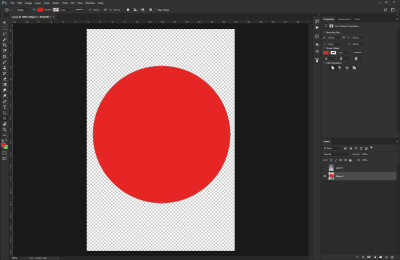
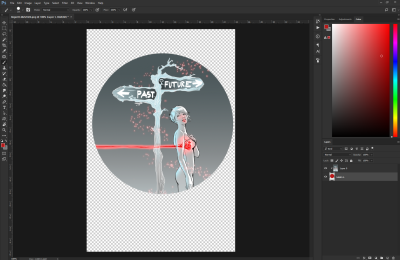
Take notice of the layers on the right side of the screen. Layer 0 is the Clipping Mask Layer of the Base Layer — Layer 1.
This choice allows you lot to really easily create frames and the best part is that they're not-destructive. The more shapes yous add (in this instance information technology's Layer 1), the more than visible parts of the image tin exist seen.
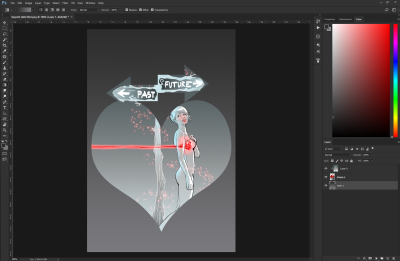
The most common utilize for Clipping Mask Layers in digital art/painting is to add shadows and highlights to a base color. For example, let'southward say that you've completed your character's line-art and you've added their base skin tone. Yous can utilise Clipping Mask Layers to add non-subversive shadows and highlights.
Notation: I'1000 using the term "non-subversive" because you cannot erase away something from the base layers — they will be safe and sound.)
So, how do you create those Clipping Mask Layers? Well, each ane starts off equally a regular "Layer".
To create a regular Layer, yous can employ this shortcut:
| Activity | Keyboard Shortcut |
|---|---|
| Creates a new regular Layer | Ctrl/Cmd + Shift + N |
| Makes the newly created Layer into a Clipping Mask to the Layer below it | Ctrl/Cmd + Alt + G |
An culling way to make a regular layer into a Clipping Mask is to printing and concur the Alt central, and click between the two Layers. The upper layer volition then get the Clipping Mask of the layer below.
Selecting All Layers
Every once in a while, you may want to select all of the layers, and group them together so that yous can continue building on top of them or a number of other reasons. Typically, what I used to do is merely agree the Ctrl/Cmd key and then start clicking abroad at all of the layers. Needless to say, that was a fleck time-consuming, specially if I'm working on a big project. So here's a better style:
What you would need to exercise is just press: Ctrl/Cmd + Alt + A.
Now that should've selected all of your layers and you lot will be able to do anything you lot want with them.
Flattening Visible Layers
Clipping Mask Layers may exist totally crawly, withal, they don't e'er work well if you want to modify something in the full general image you lot're doing. Sometimes you simply demand everything (due east.one thousand. base color, highlights and shadows) to finish being on different layers and just be combined into 1. Sometimes yous just demand to merge all currently visible layers into i, in a non-destructive style.
Here's how:
Press and concur Ctrl/Cmd + Alt + Shift + E.
Et voilà! Now you should be seeing an extra layer on the top that has all other visible layers in it. The dazzler of this shortcut is that you however have your other layers beneath — untouched and safe. If you mess up something with the newly created layer, you tin can nevertheless bring things back to the style they were earlier and start anew.
Copying Multiple Layers
Every at present and then we're faced with the need to copy stuff from multiple layers. Typically what most people practise is duplicate the 2 given layers they need, merge them and so beginning erasing abroad the unnecessary parts of the prototype.
What you demand to do instead is to make a selection and then printing:
Ctrl/Cmd + Shift + C
Here's an example:
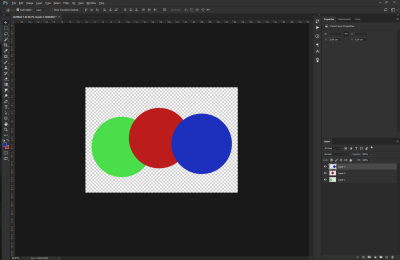
As you can run across, each color dot is on a separate layer. Let'southward say that nosotros need to copy a straight rectangle through the middle of the dots and re-create it on a layer at the meridian.
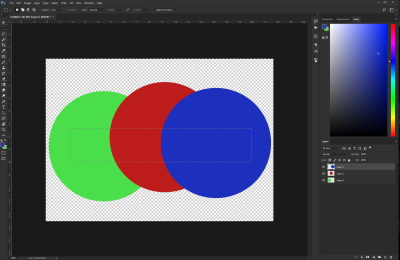
We've made a option and one time you printing Ctrl/Cmd + Shift + C, Photoshop will copy everything you accept in your selection to the clipboard. So all you lot take to exercise is simply paste (Ctrl/Cmd + Five) anywhere, and a new layer will announced on the acme of the page.
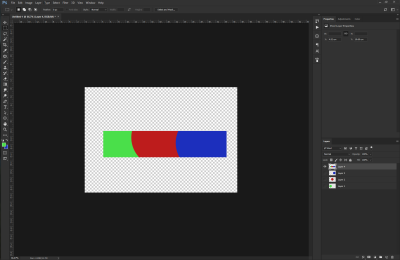
This shortcut can come really handy especially when you're working with multiple layers, and you lot need but a portion of the image to exist together in a single layer.
7. Working With Curves
In this section of the article, I would like to encompass the importance of values as well as Curves which are generally a big topic to encompass.
Starting off with the shortcut: Ctrl/Cmd + M.
Pretty simple, right? The all-time things in life are (almost) ever elementary! However, don't let this talk about simplicity fool you, the Curves setting is one of the most powerful tools you have in Photoshop. Particularly when it comes to tweaking effulgence, contrast, colors, tones, and so on.
Now some of you lot may be feeling a bit of intimidated by the previous judgement: colors, tones, dissimilarity,... say what now? Don't worry, because the Curves tool is pretty simple to understand and it will do marvelous things for you. Permit's dig into the details.

This is what the Curves tool basically looks like. As yous tin see, in that location'southward a moderate amount of options available. What we're interested in, nonetheless, is the area I've captured inside the red square. It is actually a uncomplicated Histogram with a diagonal line across. The Histogram's purpose is to prove the values of the given prototype (or painting), left being the darkest points and correct beingness the lightest ones.

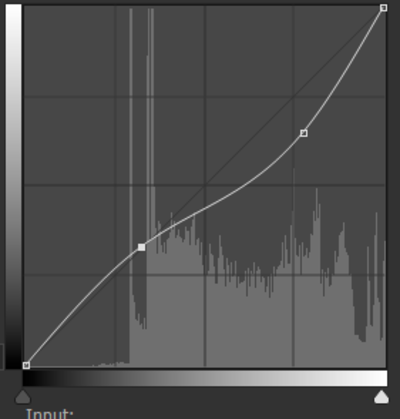
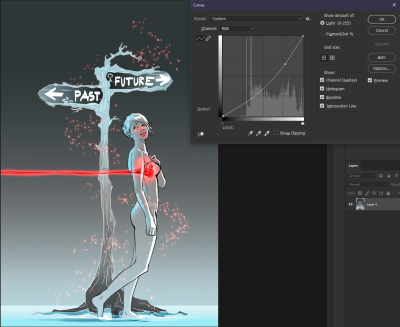
Using the mouse, we can put points on the diagonal line and drag information technology up and downwards. Nosotros typically decide what nosotros desire to darken or lighten. If, for example, nosotros want to have the lite parts of our image be just a flake darker, we need to click somewhere on the correct side and drag down (just similar in the first image).
Hither'south an example. First, have a look at the normal image:

Now, using Curves with the light parts toned downward:
Ain addition, just for sit-in purposes, hither's what would happen if nosotros have the lighter parts darkened and the darker parts lightened:
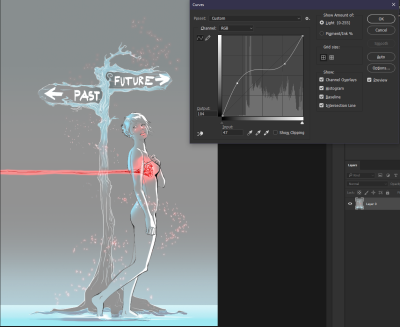
Y'all see, basically the linework is the darkest function, which stayed and the other darks take been lightened to a grayish blazon of value.
Now let me speedily elaborate on values and why they matter: past "values," specially in the art world, we're referring to the amount of lightness or darkness in a cartoon (painting). With values, we create depth in our painting which on its office helps with creating the illusion which chemical element is closer to the viewer and which one is in the altitude (further dorsum).
eight. Actions: Recording Everything You Need For Your Project
Every then oft we all need to bargain with repetitive processes which could range from adding a filter over our image to creating certain types of layers with blending modes. Does this sound familiar? If so, continue reading.
Did yous know that Photoshop supports programming languages such as JavaScript, AppleScript, and VBScript to automate sure processes? I didn't, as programming has never been my cup of tea. The good thing is that instead, I came across the Actions panel, which offers a lot of functionality and options for automating some repetitive tasks and workflows. In my opinion, this is the all-time automation tool that Photoshop has to offer if you don't know how to lawmaking.
The Actions panel basically can tape every process you're doing (east.grand. calculation a layer, cropping the image, changing its hue, then on); so you can assign a function primal to this process and easily re-apply it afterwards at any time.
By using the Actions panel, you tin capture just nearly annihilation that yous do in Photoshop and then save information technology as a process.
Let me give yous an example. Permit's say that you want to automate the process of Create a new Layer, ready it equally a Clipping Mask, and so set its blending style to Multiply (or anything else). You lot tin tape this whole process which would then be bachelor to you for re-use by the printing of a button.
Here's how information technology works:
Pressing Alt + F9 volition open this panel:
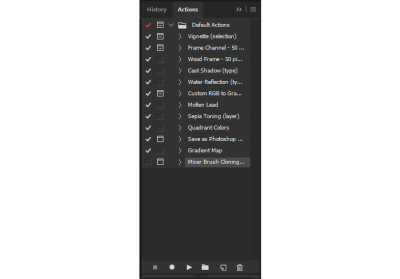
As you tin probably see, in that location are some default (pre-recorded) processes on there. What we're interested in, however, is creating our own activity, which is done past clicking on the "Create new action" icon.
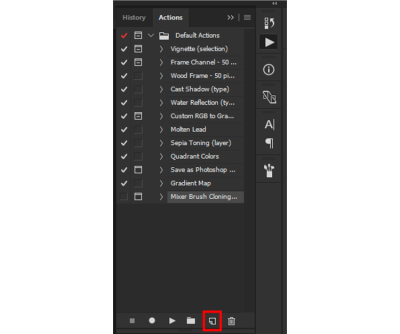
Now just similar when you create a new layer in the Layers console, once you lot click on the "Create new action" icon, a pop-upwards window opens with a few options in it.
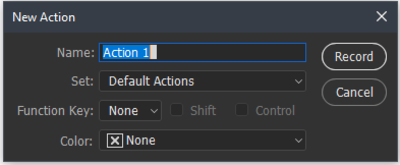
You tin cull any given proper noun for the Action you want to create and assign a Office fundamental for it. So, for this demonstration purpose, I'll create an activeness that will do the following:
- Create a new transparent Layer;
- Add it every bit a Clipping Mask to the Layer below;
- Prepare its blending way to Multiply.
I'll fix its Function key to Shift + F2.
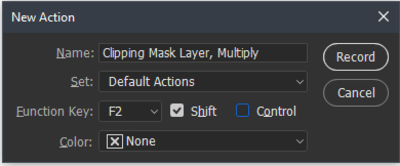
Once you're prepare with these settings, what yous demand to do is press the Record button. Once you've done that, you lot'll notice that the Actions panel now has a red push to show you lot it'due south recording.
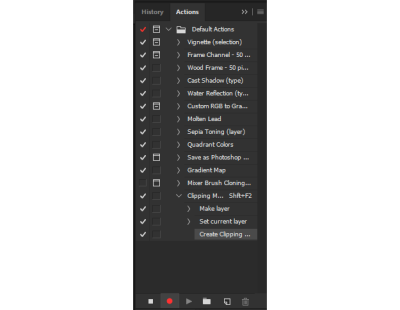
Now you only have to become about the regular process of creating a new layer, set it as a clipping mask and alter its blending way to Multiply.
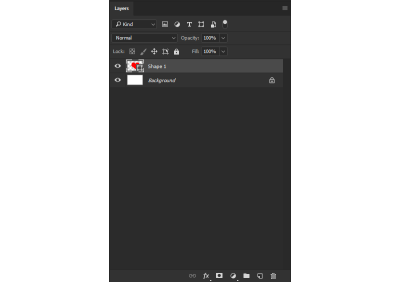

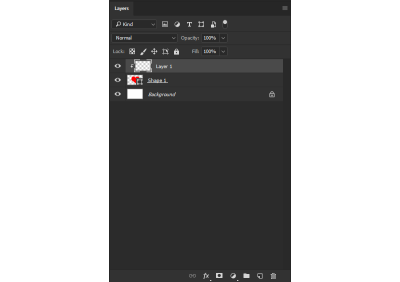

Once you're washed, you have to hit the Stop icon on the Actions console.
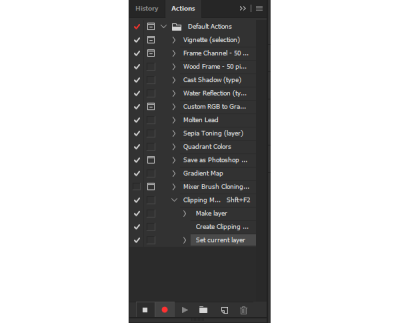
Your automation process is now ready to go! When you printing Shift + F2, you'll become a new Layer set up as a Clipping Mask to the layer below and its blending mode set to Multiply.
I would likewise like to mention that the Actions automation process is not express to but creating layers and setting blending modes. Hither are some examples of some pretty handy other uses and options for actions:
- You can set to save images every bit certain types of files to certain folders on your figurer;
- Using File → Automate → Batch for processing lots of images;
- The Allow Tool Recording option in the flyout Deportment panel menu allows actions to include painting, and so on;
- The Insert Conditional option in the flyout Actions panel menu allows deportment to modify their behavior, based on the country of the document;
- File → Scripts → Script Events Manager lets deportment run based on events, like when a document is opened or a new document is created.
Permit me give you another example, I'll create some other Activity that will change the size of my prototype and salve it every bit a PNG file in a sure folder on my desktop.
Then after we hit the New Action button on the Deportment panel, we'll go along with picking the shortcut that we want, ready a name for it, and I'll accept it a step further and assign a color to the Action (I'll explicate why this is a helpful feature in a flake).

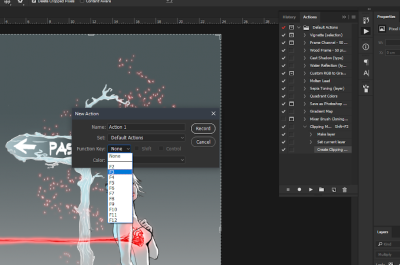
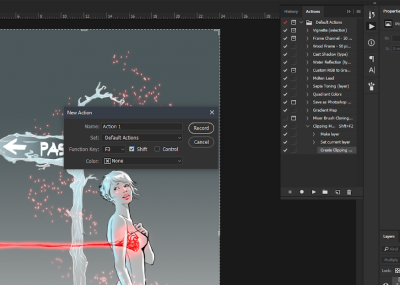
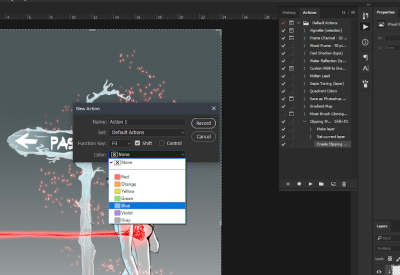

Now virtually that color, you may detect that when you assign a color, it doesn't really reflect in the Actions Panel. Instead, everything stays monochrome. The reason is because when you typically open that console, you're in the Edit view, where y'all're able to alter the Actions, record new ones, and so on. In society to see all of the available actions in a simpler interface, do this:
- On the upper-right hand corner of the panel you will run across iv horizontal lines. Click on those.
- You'll get a drib-down carte, where you accept different Deportment options. On the superlative, you'll notice a Button Mode.
- Clicking on that will change the Deportment Panel interface, where you volition see your bachelor Deportment as colorful buttons.
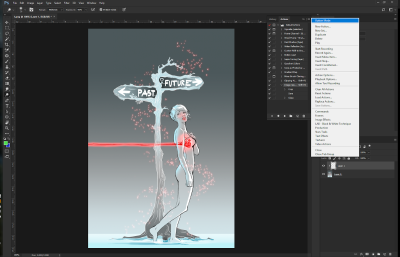
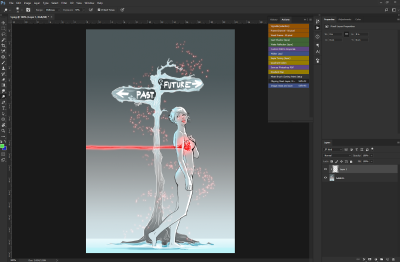
If you haven't guessed it already, coloring your Actions will help you distinguish them more easily at a glance. In Button way, when you lot have a glance at the panel, you will exist able to navigate quickly to the Action that you want to employ to your image/drawing (if you lot don't really think the shortcut y'all've assigned for information technology).
Okay, then what nosotros have and then far is the following:
- Nosotros've created a new action;
- Fix the shortcut for it;
- Changed its color;
- Named information technology.
Let's proceed with recording the procedure that we need.
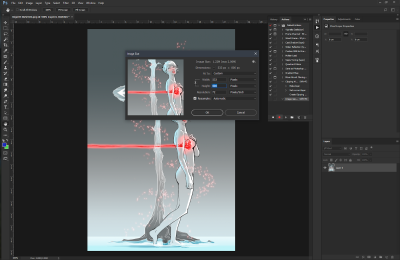
To open the Image Size menu, you lot can either go to Image → Image Size or simply striking Ctrl + Alt + I and you'll get this window:
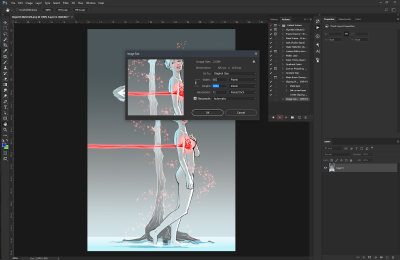
What you would want to do is set the desired size for your prototype and once you're happy with that hitting "OK" to use the changes.
Next, what we want to do is use the Save As option in order to get the choice to cull the type of file, destination folder, and and then on. You can either go to File → Save As... or you could simply printing Ctrl + Shift + Due south and you will get the following window:
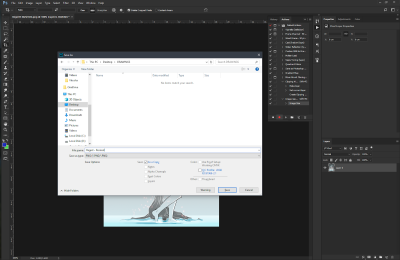
Navigate to the dedicated binder in which you desire to save the current project in and actually salvage information technology there. An additional Action you can do is to close the image/project yous're working on (don't worry, the Deportment won't finish recording unless y'all close down Photoshop).

Once all of that is washed, you can hit the Stop icon on the Actions Panel to cease recording your move in Photoshop.
If you demand to resize a bunch of files and save them in a defended folder, you just have to load them upward in Photoshop and continue hitting the Activity shortcut that yous've created for Resizing and Saving.
If you have the time to get accepted to the Actions tool in Photoshop and utilise it, you can say "Goodbye" to the bothersome repetitive work that usually eats up most of your time. You will be able to fly through these tasks with such speed that even the Wink could go jealous of.
9. Decision
In this article, I've shared some of the shortcuts I mostly employ. I sincerely hope that they will help y'all boost up your productivity and make your workflow improve likewise.
Special Thanks
I would like to mention that this tutorial was made possible with the aid of Angel (a.k.a. ArcanumEX). You can check out his artwork on his Facebook page, on Instagram, and on his YouTube channel.
Further Reading
In addition to everything I've talked most so far, I'll include more than resources that I believe you might find helpful. Be sure to bank check out:
- Noah Bradley's Resource page
- Feng Zhu'due south YouTube Channel
- Proko's YouTube Channel
- Tamplier'south Aqueduct
What are your favorite shortcuts? Experience free to share them in the comments beneath!
 (mb, ra, yk, il)
Source: https://www.smashingmagazine.com/2018/10/photoshop-workflows-shortcuts-digital-artists/
0 Response to "In What Style of Art Does the Artist Apply Paint Rapidly to Enlarge Convert to Show Emotion"
Post a Comment